


- Our heritage
- 2020 – current
- 2010 – 2019
- 2000 – 2009
- 1900s
- 1800s
A solid foundation
The earlier foundational entities of the Nedbank Historical Collective hold the underpinnings to both Nedbank’s history, and the history of banking in southern Africa. These entities, being the Cape of Good Hope Savings Society (1831), the South African Association for the Administration and Settlement of Estates (1834), the Board of Executors (1838), the Syfrets Trust Company Ltd (1851), the General Estate and Orphan Chamber (1856), the Natal Building Society (1882), De Stellenbossche Distriksbank (1882) and the Kimberley Permanent Mutual Building and Investment Society (1883) paved the way, in their own ways, to the financial systems and banking processes that are so successful today.
1831 - 1888

Innovative, right from the start!
These entities started out by marching to the beat of their own drums, making waves and establishing themselves in a rapidly advancing ‘new world’.
Learn more about some of these early institutions here.

The Nederlandsche Bank story
Opened on the 6th of April 1888 , the Nederlandsche Bank en Credietvereeniging was founded in Amsterdam, The Netherlands, under royal charter. Following on from a plea directly to H.H. King Willem III for a South African agency of the bank, the first South African branch was opened in Church Street in Pretoria on the 1st of August 1888, with capital of £50,000.
Read the Nederlandsche Bank Story here.
Naming Nedbank
Over the past years, while we’ve changed our name and our faces a few times, we have remained true to our strong values and client-centric business.
1888 - 1903
De Nederlandsche Bank en Credietvereeniging
1903 - 1951
De Nederlandsche Bank en Credietvereeniging voor Zuid-Afrika
1951 - 1971
The Netherlands Bank of South Africa
1971 - 1989
Nedbank Ltd
1989 - 2005
Nedcor Ltd
2005 - Present
Nedbank Group Ltd
1888 - 1951

Entering the market
The 1st of August 1888 saw the establishment of a South African agency of the Amsterdam-based Nederlandsche Bank en Credietvereeniging opening its doors in Church Street, Pretoria. This was a phenomenal break-through for not only South Africa, but also for the humble bank as it began paving the road for Nedbank’s long and rich narrative through the history of 19th Century South Africa to today.
This marked the dawn of a new era, as at the time the only other true banks were the first state bank, Lombaard Bank (1792 – 1883), and the first private banks; Cape of Good Hope Bank (1831 -merged into Nedbank in 2003), and the Eastern Province Bank (1838 - merged into First National Bank after its registration as De Nationale Bank der Zuid-Afrikaansche Republiek in 1891). This made us one of the first official banks in the country.
1964 - 1988

For people who are serious about money
The second-half of the 20th century was an accelerated period of growth and expansion for the bank. All this, whilst the global sanctions tightened their grip on the South African economy, The Netherlands Bank for South Africa persevered in remaining neutral and a-political, providing banking services and even then, using our financial expertise to do good for all South Africans.
In 1969, with the purchasing of the remaining 20% Dutch-owned sales of the NBSA from Mees en Hoop (Amsterdam), the Netherlands Bank of South Africa became 100% South African-owned.

Taking the [Banking] world by storm
Nedbank prides itself in its lengthy number of firsts. Arguably one of the most important of these happened in 1964. With the triumphant boom towards the future-fitting of the bank’s business operations through the efforts and ingenuity of the trio formed by Dr Bernard Holsboer, Gerry Muller and Albie Saayman who revolutionised the way not only the Netherlands Bank, but all banks did business with the introduction of computerised banking services to the South African banking industry.
Learn more about only just a few of the Nedbank Historical Collective’s ‘firsts’ here.
1990 - 1999

The dawn of democracy
As if there wasn’t enough reason to celebrate following the triumphant release of Nelson Mandela and the emergence of South Africa as a new and unified nation; Nedcor embarked on further firsts in global partnerships. These being the WorldWide Fund for Nature (WWF), The Arts & Culture Trust and the Sports Trust which still operate in earnest today as the Nedbank Affinities and continue to do good for the lives of everyday-South Africans and the environment.
Learn more about the Nedbank Affinities here.
2005 - 2011

One tree, many leaves
Like the fireworks heralding in the ‘New Millenium’, Nedcor rocketed through the stratosphere and continued expanding its reach and influence. By 2005, the newly-formed ‘Nedbank Group Ltd’ was constituted, and celebrated the additions of the Cape of Good Hope Bank, NBS Boland, The Perm, Pick ‘n Pay GO BANKING, and BoE, to name a few.
Emboldened by the ever-growing network of branches and clients, Nedbank began to make things happen into southern and central Africa, with the integration of branches from Namibia to Malawi through the complete merging with Ecobank by 2011.

Green before it was cool!
Nedbank opened the country’s first wind powered branch in the Western Cape town of Du Noon making it the first bank branch in the country to derive its energy from sustainable energy source. The new branch will be powered by wind turbines installed by Eveready Kestrel Wind Turbines that will generate some the electrical power that the branch will need to operate.
The opening of the Nedbank Du Noon Branch forms another example of the bank’s commitment to ensure that all South Africans have access to banking. The launch also ensures that Nedbank honours its promise to make financial services accessible, convenient, affordable and sustainable.
2012 - 2017

A chance to see money differently
With the introduction of a few new kids on the block joining the banking sector, it was the perfect opportunity for Nedbank to dust off a few cobwebs and re-invent our brand identity. Through liberating our ‘N’ from its circle and adopting a new purpose for our business that would always put our nation’s people and environment first.
2018 - 2022

Using our financial expertise to do good
There has been no better opportunity to showcase our unwavering dedication to ensuring our financial expertise is put to good use, than our first-off-the-mark involvement in the Youth Empowerment (YES) programme and being entrusted by South African Reserve Bank to curate the Venda Building Society, and facilitate all the necessary repayments to their depositors.
Learn more about Nedbank’s heritage and history

The Nedbank 135 Rivonia Road Campus in Sandton is home to the main Heritage Hub, which showcases an immersive experience into the bank’s nearly two centuries of history, as well as artefacts, numismatics, and time capsules.
For any further queries or information, don’t hesitate to reach out to us at HeritageArchives@nedbank.co.za.
Our history videos
The first instalment of a series of episodes that journey through the history of the Nedbank Historical Collective. Episode 1 looks at the first century of the Collective’s past, from 1831–1951, and positions the stories of the earliest facets of Nedbank Group's 20-strong compliment of entities.
Episode 2 dives into the story of our business through the years 1964–1988, looking at its growth and transformation in relation to the socioeconomic and political policies during apartheid. During this time, the Netherlands Bank for South Africa was still partially a Dutch-owned entity, and was able to remain neutral in a time of an oppressive societal regime. It was at this time that the NBSA introduced computerised banking to South Africa.
In the 3rd episode, the foundational premise of Nedbank’s philosophy, doing good, is explored as something we’ve done for many years. However, with the market segmentation of Perm and Peoples Bank during 1990–1999, we came off as an elitist bank. As we slowly began restoring our image, we introduced Cellphone Banking – a market first, followed by the country’s first debit card.
As the various entities and offerings under the Nedbank umbrella merged in 2005, episode 4 shares the birth of a redefined and inclusive bank – ensuring all South Africans were empowered to make things happen, with full and dedicated banking for all. This soon expanded, and Nedbank was able to set deep roots throughout the rest of Africa through the alliance with Ecobank, bringing Nedbank to over 600 branches across 44 countries.
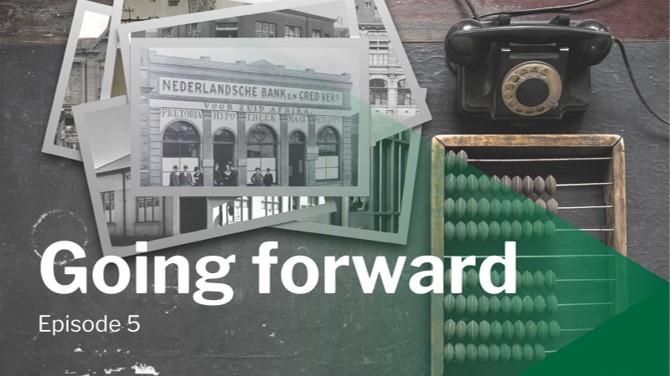
In the 5th episode, Nedbank embarked on one of its biggest adventures yet and embraced the chance to see money differently, adopting a revitalised brand identity that echoed the bank’s deep-rooted aspiration to build a better tomorrow for Africa’s people and environment.
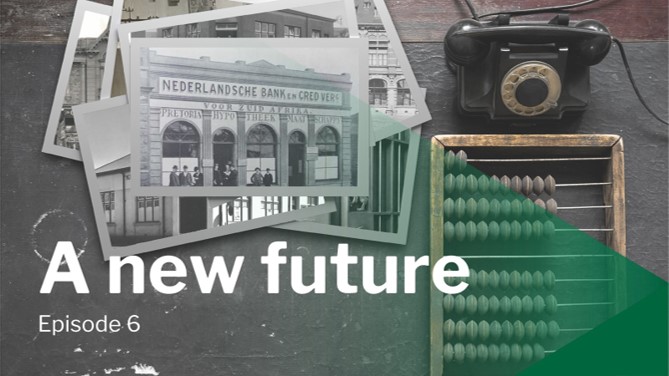
A new future was ushered in on the triumphant rebranding of Nedbank Group, which is carried by our promise of using our financial expertise to do good. Additionally, the adoption of a digital-first strategy led to the development and integration of a series of products and services at the height of the Covid-19 pandemic, which were able to keep our clients and employees safe. This included innovated hybrid-working strategies, and market-first cardless and handling-free payment methods.
2025
- Completed organisational restructure of the group into a more focused, client-centred organisational design, resulting in the formation of the Personal and Private Banking (PPB) and Business and Commercial Banking (BCB) clusters and the continuation of the existing Corporate and Investment Banking (CIB) and Nedbank African Regions (NAR) clusters.
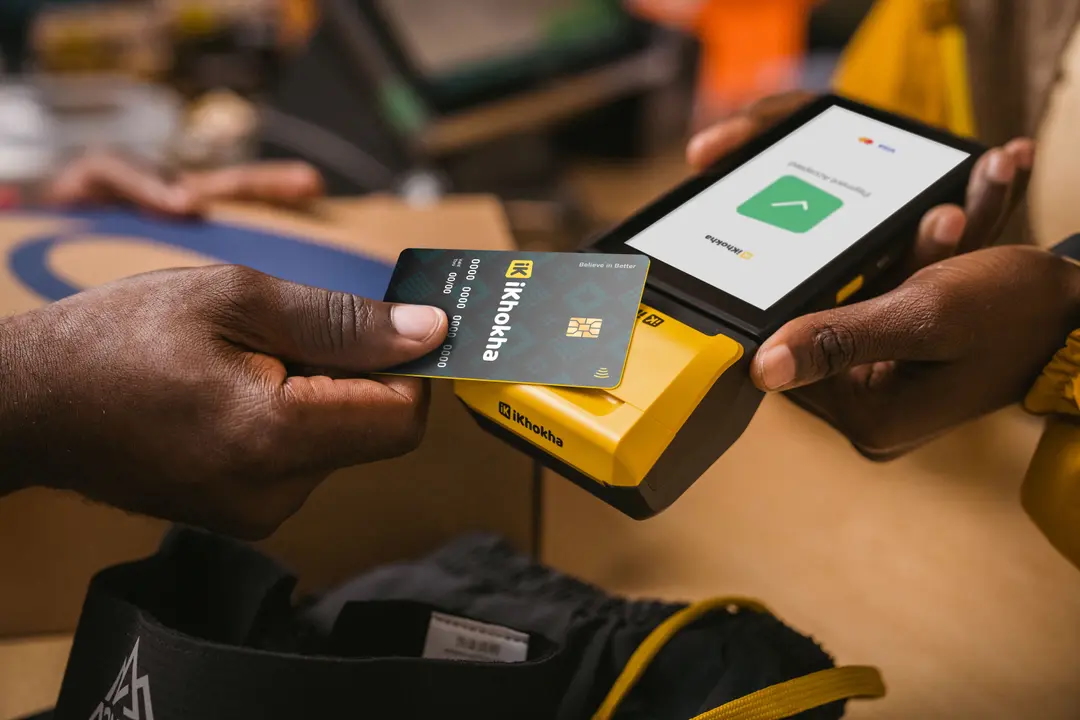
- Acquired 100% of the fintech innovator iKhokha Proprietary Limited.
- Announced the disposal of Nedbank Group’s shareholding in Ecobank Transnational Incorporated (ETI).
- Launched Nedbank Connect, marking the group’s entry into mobile telecoms with a client-exclusive mobile service that combines flexible plans, digital onboarding, and airtime rewards through Greenbacks.

2024
- Appointed Jason Quinn as Chief Executive, succeeding Mike Brown after his retirement.
- Acquired Eqstra to strengthen Nedbank’s positioning in the fleet-management market.
- Completed the Managed Evolution Technology transformation programme to modernise the group’s core banking systems.
- Published the group’s inaugural Nature Position Statement, forming the basis for related strategies and the foundation for setting policy and nature commitments and targets.
- Became an official signatory of Partnership for Carbon Accounting Financials (PCAF).
- Awarded South Africa’s Bank of the Year 2024 by The Banker magazine, recognising Nedbank’s leadership in digital innovation, sustainable finance, and client-focused banking transformation.
2023
- Appointed Daniel Mminele as independent Non-Executive Director and Chairperson.
- Disclosed sectoral transition glidepaths for thermal coal, upstream oil and gas, and power generation portfolios.
2022
- Nedbank Group ordinary shares started trading on A2X Markets via a secondary listing on 1 April 2022.
- Disclosed financed emissions for coal, oil and gas for the first time.
- Launched the Nedbank Business Hub, a secure digital platform offering 24/7 business banking.
- Became a signatory to the UN-supported Principles for Responsible Investment.

2021
- Introduced solutions for clients to open FICA-compliant accounts remotely, via the Money App and Online Banking.
- Formed the Group Climate Resilience Committee. In 2024 it was renamed the Group Sustainability and Climate Resilience Committee, mandated with oversight of sustainability and climate-related risks and opportunities.
- Published Nedbank’s Energy Policy, pledging to eliminate exposure to fossil fuels by 2045 and achieve net zero emissions by 2050.
- Surpassed R100 billion in SDG-linked financing and funding, reinforcing Nedbank’s commitment to sustainable development and impact-driven banking.
- Rebranded of Banco Único as Nedbank, marking a strategic milestone in Nedbank expansion across sub-Saharan Africa.
- Launched Enbi, an AI-powered chatbot on its Money app and Online Banking platforms, offering clients intuitive, conversational assistance for everyday banking tasks.
- Appointed Mpho Makwana as Non-Executive Director and Chairperson.

2020
- Appointed Mike Davis as CFO, after Raisibe Morathi stepped down.
- Published Nedbank’s inaugural Task Force on Climate-related Financial Disclosures (TCFD) Report, structured around governance, strategy, risk management, and metrics/targets.
- Published Nedbank’s Climate Change Position Statement which included a public pledge not to fund new coal-fired power plants, regardless of country or technology.
- Increased the group’s shareholding in Banco Único to 87.5%, a strategic move aimed at strengthening Nedbank's presence in the Southern African region.
- Maintained operational stability and supported clients through relief measures and digital solutions during the Covid-19 pandemic.
- Launched Avo Super App, providing access to online shopping, essential services, and financial products on one platform.

2019
- Issued South Africa’s first private sector green bond, raising R2.7 billion to finance four renewable energy projects.
- Launched a new Stokvel Account, expanding accessible financial solutions.
- Rolled out Unlocked.Me, a customer value proposition (CVP) tailored for the youth segment.
- Deployed MobiMoney, enabling money transfers, airtime and electricity purchases, withdrawals without a formal bank account, as well as cross-border remittance.

2018
- Old Mutual completed the unbundling of its majority shareholding in Nedbank, marking the completion of the Managed Separation, with the distribution of Nedbank shares to Old Mutual shareholders taking place on 15 October 2018.
- Integrated the United Nations Sustainable Development Goals (UN SDGs) formally into Nedbank’s sustainability reporting and strategic frameworks, with clear mapping of business activities to specific SDGs, replacing the Fair Share 2030 initiative.
- Achieved Level 1 B-BBEE contributor status, reflecting its deep commitment to transformation and inclusive economic growth.

2017
- Launched the Nedbank Money App, marking a significant upgrade from Nedbank’s previous mobile banking platforms, offering enhanced functionality such as real-time account management, payments and transfers, card control features and integration with our Greenbacks rewards programme.
2016
- Acquired 50% plus one share of Banco Único in October 2016.
- Old Mutual announced its Managed Separation strategy to split its operations into four independent businesses, including Nedbank Group (52% stake).
- Launched a brand refresh and group’s purpose statement, positioning Nedbank in the hearts and minds of society as the bank that uses its core expertise in financial services to do good and secure positive outcomes for individuals, families, businesses and society.
2015
- Integrated Nedbank Capital and Nedbank Corporate into a single wholesale business cluster, Nedbank CIB.
- Appointed Mfundo Nkuhlu as COO and joined the Nedbank boards as executive director.
- Launched Market Edge™, a data analytics platform to help business clients make informed decisions.
- Appointed Vassi Naidoo as independent Non-Executive Director and Chairperson.
2014
- Concluded the acquisition of an initial 36.6% shareholding (with a pathway to control in 2016) of Banco Único in Mozambique.
- Exercised the group’s right to become a 20% shareholder in Ecobank Transnational Incorporated (ETI).
2013
- Launched market-leading products such as PocketPOS™, MyFinancialLife™, My eBills™ invoice issuing and payment system.

2012
- Launched the Approve-it™ authentication system, the first of its kind in South Africa to use cellphone-based authentication for transactions.
- Launched SA’s first Green Index to serve as a benchmark for environmentally conscious investors. The index measured the performance of companies with environmentally sustainable business practices and combined environmental credentials with predetermined liquidity screening criteria to create an investable environmental sustainability index.
- Secured a 37% share of the funding in the first phase of South Africa's Renewable Energy Independent Power Producer Procurement Programme.
- Established the Group Transformation, Social and Ethics Committee, mandated with oversight of transformation, social, and ethics matters.
- Recognised by Euromoney as Best Bank in South Africa noting our strategic capital redeployment and investment in staff as key factors.
- Opened the first wind-powered branch in Dunoon, Western Cape.

2011
- Published the group’s first Integrated Report, marking the culmination of our transition to integrated reporting and aligning with the KingTM Code of Corporate Governance.
2010
- Acquired the remaining 49.9% of Imperial Bank, with full integration from October 2010.
- Launched the m-pesa cellphone banking solution in partnership with Vodacom
- Became the first carbon-neutral bank in South Africa, successfully offsetting the group’s operational carbon footprint through verified carbon credits and sustainability initiatives.
- Appointed Mike Brown as Chief Executive.

2009
- Bought out Old Mutual's stake in the Bancassurance and Wealth joint ventures.
- Obtained regulatory and Competition Commission approval to acquire the Imperial Bank minorities to create South Africa's second-largest vehicle finance business.
- Appointed a new leadership team which includes Mike Brown as Nedbank Group's Chief Executive Officer from March 2010.
- Received a four-star rating from the Green Building Council of South Africa for the phase II expansion of its head office in Sandton.

2008
- Undertook client-focused restructuring and made new executive appointments to include Business Banking and Corporate Banking on the Group Executive Committee.
2007
- Successfully delivered on the financial targets set at the start of the strategic recovery programme in 2004
- Integrated Old Mutual Bank into Nedbank Retail.
- Granted Nedbank's first mass-market sponsorship, namely the Nedbank Cup in the Premier Soccer League aligning with Nedbank’s goal of becoming a bank for all, supporting national pride and community involvement through sport.
2006
- Unveiled Nedbank's BEE transaction in Namibia.
- Announced a major plan to expand Nedbank Retail's footprint by improving representation in underserved areas
- Appointed Reuel Khoza as independent Non-Executive Director and Chairperson
2005
- Rebranded Nedcor Limited as Nedbank Group Limited, unifying all business units under one brand and aligning the holding company’s identity with its principal operating subsidiary, Nedbank Limited.
- Announced the group's BEE deal 'Eyethu' – the first truly broad-based deal
- Merged with Peoples Bank, with the aim of streamlining operations and enhancing Nedbank’s retail banking footprint.
2004
- Raised R5 billon in a rights issue.
- Restructured the group into three principal business clusters: Nedbank Corporate; Nedbank Capital; and Nedbank Retail
- Introduced certificate-based security innovation to the Nedbank Online Banking Platform in 2004, a pioneering move to bolster information security and fraud prevention.
2003
- The newly formed Nedbank Limited came into effect on 1 January 2003 as a result of the merger of four banks-Nedcor, BoE, Cape of Good Hope Bank, and Nedbank Investment Bank.
- Appointed Tom Boardman as Chief Executive.

2002
- Nedcor merged with BoE Limited, which laid the foundation for a major restructuring of the Nedcor Group.
- Nedcor Investment Bank minority shares acquired and NIB delisted.
- Nedbank expanded its alliances with key partners such as: Pick ’n Pay Go Banking; Old Mutual Bank; Capital One; and JD Group - with the aim to broaden Nedbank’s retail banking reach and product offerings.
2001
- Permanent Bank and Old Mutual Bank merged.
- Acquired a 51.1% stake in Imperial Bank in 2001 to expand our footprint in vehicle and asset finance.
2000
- Acquired FBC Fidelity Bank as part of a broader strategy during the early 2000s consolidating and strengthening our position in the South African banking sector.
- Undertook a reconfiguration of our retail branch network as part of a broader effort to streamline operations and improve cost-efficiency.
1990s
1999
- Nedbank Private Bank and Syfrets Private Bank merged to create the largest private bank in South Africa.
- BoE merged with Natal Building Society (NBS) and Boland.
1998
- NBS merged with Boland Bank to form NBS Boland.
1997
- Syfrets merged with UAL Merchant Bank and Nedbank Investment Bank Division to form the listed NIB.
- The Nedtel Cellular innovation was introduced in 1997 under the management of Nedbank Information Technology, further endorsing Nedbank’s position as a leader in the electronic world.
1995
- Perm split its operations into Permanent Bank and Peoples Bank.
1992
- Nedfin, Perm and Nedbank became known as Nedcor Bank, a wholly owned subsidiary of Nedcor.
1990
- Nedbank in association with the World Wide Fund for Nature launched The Green Trust.
1980s
1989
- Nedbank Group changed its name to Nedcor.
1988
- Nedbank merged with Permanent Building Society to form NedPerm Bank.
1987
- The NedInform innovation was introduced – a technology that enabled corporate clients to do Office Banking, a precursor to modern internet banking. NedExec was launched shortly after NedInform, offering similar capabilities to business banking clients.
1986
- Old Mutual became the major shareholder (53%) of Nedbank.
- Nedbank Investment Bank was created as a result of the acquisition of Finansbank Limited.
1983
- Became the first bank in South Africa to pay interest on current accounts.
1970s
1976
- The Credit Corporation of South Africa, established in 1946, became Nedfin Bank.
1973
- Nedbank Group formed from the merger of Syfrets South Africa and Union Acceptances and Nedbank.
1971
- The Netherlands Bank of South Africa (NBSA) changed its name to Nedbank.
1970
- The merchant bank Finansbank was established.
1960s
1969
- The South African shareholding in NBSA increased to 100%. Syfrets SA was listed on The Johannesburg Stock Exchange (JSE).
- Boland Bank was listed on the JSE.
1967
- Introduced American Express® Card Service through the issue of the American Express Gold Card.
1964
- Nedbank was the first to introduce computerised banking services on 31 May 1964, when the Fox Street branch became the first to go live on a NCR computer.
1950s
1951
- The Nederlandsche Bank voor Zuid-Afrika (NBZA) was established as a South African banking company and changed its name to the NBSA.
1940s
1946
- The Credit Corporation of South Africa was established.
1920s
1925
- NBZA merged with the Transvaalsche Bank en Handelsvereeniging, which had been founded in 1892.
1900s
1903
- The Nederlandsche Bank en Credietvereeniging voor Zuid-Afrika (NBCV) changed its name to NBZA.
1900
- Boland Bank was established as a regional general bank.
1890s
1898
- Transvaalsche Bank en Handelsvereeniging was formed.
1892
- The Kimberley Permanent Mutual Building and Investment Society changed its name to South African Permanent Building and Investment Society, later known as Perm.
1880s
1888
- The Nederlandsche Bank en Credietvereeniging (NBCV) was established.
1882
- Natal Building Society (NBS) was established.
1840s
1841
- Kimberley Permanent Mutual Building and Investment Society was inaugurated.
1830s
1838
- The Board of Executors was established in Cape Town as a trust company.
1831
- Cape of Good Hope Bank was established.


